

I think I eat more pasta in the winter than any other time of year. So it's winter here in New England and it's time to hunker down and eat pasta. I've been wanting to make some kind of gochujang noodle for a while and did some testing with this one. You can easily make the noodles as a stand-alone, but I really wanted a fuller recipe. That's how I landed on these spicy Parmesan gochujang noodles with pork & bok choy.
what is gochujang? Is it Spicy?
Gochujang is a red Korean chili paste. It's slightly smoky, a little salty and adds a nice depth of flavor. The spicy part is up to you. When you're purchasing the gochujang, read the label. I don't usually want mouth-on-fire spice so I choose the mild version which still has a nice kick to it. I usually pick mine up at H-Mart (a Korean supermarket in my area), but gochujang is available in most Asian markets and I'm starting to see this in regular grocery stores as well. And if you bought the gochujang for these spicy parmesan gochujang noodles, you should definitely try my spicy garlic chili noodles too. I should also mention that ribbon noodles are another great option for this recipe as well.

spicy gochujang noodles: eat alone or add pork and bok choy
You're going to do what you're going to do. If you're craving spicy pasta, you might just make the pasta part and skip the pork and bok choy. That's fine. I would still recommend chopping some scallions for garnish though. However, if you're looking for a fuller meal make the pork and bok choy as well.

You can use any protein you like here. Chicken or thin cut beef would work well - whatever you're in the mood for. Chopped chicken tenderloin, ground chicken, ground pork or beef would be great too. I found pork tenderloin was a good option because they're pretty cheap - definitely lower cost than chicken or beef. I also like the tenderness and flavor of pork tenderloin.
With the noodles you can use thin spaghetti like I did or linguine, fettucinni, long fusilli, or Taiwan ribbon noodles would be awesome too!
Baby bok choY and other delightful greens
I liked the bok choy because when you bite into it a little burst of water comes out in your mouth. So you've got the spice from the gochujang pairing with the burst of water from the bok choy. There is a nice kick from the gochujang that gets mellowed out by the boy choy and I loved that mouth feel. Yes, mouth feel. It's a thing.
Other greens that could work:
- Gai lan (Chinese broccoli, also known as Chinese kale). If you're at the Asian market anyway, gai lan is usually available. At H-Mart you can buy with the stems or without. I usually get the stems because they're delicious. Just chop the stems up and steam them first, then add the leafy part. Gai lan is amazing, I just didn't have time to go to the store to get it.
- Broccolini
- Baby spinach
- Kale
- Mustard greens (only if you like that bitter taste, which is really specific)
- Asparagus
- Cubed, sautéed eggplant
Would you like to save this?
You'll also be the first to hear about new recipes in my weekly-ish newsletter! 🙂

Serving Gochujang Noodles deconstructed vs mixed together
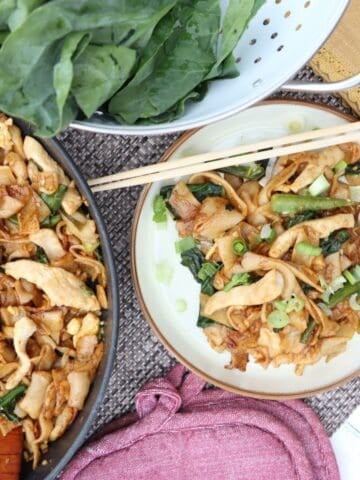
Serving this deconstructed allows your guests to make their own plates. This can work out great if you're having vegetarians for dinner. It gives your meat lovers their pork and allows vegetarians to opt out! Just make sure after you cook the pork wash the pan thoroughly or use a different pan altogether to make the sauce. You don't want to cross contaminate if you're accommodating vegetarians. I found if you mix all the ingredients together the presentation isn't as vibrant. But I have to think of details like that more since I need to photograph the meal as well. 🙂
east steps to making spicy parmesan gochujang noodles


Spicy Parmesan Gochujang Noodles with Pork & Bok Choy
- Prep Time: 30 minutes
- Cook Time: 25 minutes
- Total Time: 55 minutes
- Yield: 4-6 servings 1x
Description
Want to add a little spice to your life? Then you should definitely try these spicy parmesan gochujang noodles with pork and bok choy. So yum!
Ingredients
- 1 ½ tablespoons of garlic, finely diced
- 1 cup onion finely diced
- 1.4 lbs baby bok choy
- 1 bunch of scallions, chopped
- 1 ½ cups fresh shredded parmesan cheese (more if you want, can use bagged too)
- 1.3 lb. pork tenderloin, cut in bite-sized pieces
- ½ teaspoon salt (for the pork)
- ¼ teaspoon pepper (for the pork)
- 1 tablespoon vegetable oil for cooking
- 1 box of thin spaghetti (1lb box)
- 2 tablespoons butter (for cooking onion)
- 1 tablespoon olive oil (also for onion)
- 2 heaping tablespoons of gochujang
- 1 cup heavy cream
- ½ cup jarred grated parmesan cheese
Would you like to save this?
You'll also be the first to hear about new recipes in my weekly-ish newsletter! 🙂
Instructions
- You will need to heat a large pot of water to cook the pasta. You should add two teaspoons of salt to the pasta water to help season the noodles. Plan your time so that the water is boiling by the time you start the sauce. Then cook the pasta while you are making the sauce.
- Finely dice the garlic and set aside in ramekin.
- Finely dice the onion. Set aside.
- Cut the knobs off the bottom of the boy choys and separate leaves. Transfer to colander and wash thoroughly – they can be a bit dirty.
- Chop one bunch of scallions including all parts: dark green, light green and white.
- Shred the parmesan cheese. I usually buy one of those 8-ounces triangles. You can also use the already-shredded parmesan cheese that comes in a bag.
- With the pork tenderloin, if there are any obvious chunks of fat, trim that off with good kitchen shears. Cut the tenderloin in half across the middle. Take each half and cut it into long strips. Then sliced the long strips (lengthwise) in half again. Then cut the pork into bite-sized pieces. Do whatever you think is easiest to get the bite-sized result.
- Lay the pork pieces on a plate or small sheet pan and season with salt and pepper on one side.
- Heat vegetable oil on high heat in a large pan and wait until the pan is hot to add the pork. Spread pork out in pan so no pieces are overlapping then let it cook on medium-to-high heat for four minutes without touching it. Then turn the pieces (should have a nice sear on them) and cook two more minutes until cooked through. Remove from pan.
- Remember, water should be boiling and you should cook the pasta now since it will take around 10 minutes to cook. Cook per box instructions.
- For the sauce: On medium heat melt butter and olive oil in same pan and add the onions. Stir well. They will only take a couple of minutes to cook since they are such a fine dice. Once softened, add the garlic and turn the heat down a bit so you don’t burn the garlic. Cook another couple of minutes while stirring. Add the gochujang and mix to combine well with the garlic and onion. My video shows this well. Add the heavy cream and stir to combine until the sauce turns orange. Turn the heat up to medium again and let the sauce come to just barely a boil and you should see the sauce thickening. Add the cheese and mix to melt. You can turn heat off here and let the cheese melt naturally. It should be thick which is fine. Once the pasta is finished, take a small ladle of pasta water (maybe ¼ cup) and add to the sauce to thin it out and season it a bit. Give it one final mix and it’s done. Taste it here.
- DO NOT DRAIN THE PASTA WATER. Using tongs, transfer the pasta to a large mixing bowl. It’s okay if some of the liquid gets in the bowl. Leave the remaining pasta water in the pot and add the baby bok choy right into the boiling water. Let cook a minute or two to wilt the leaves and transfer back to a colander or plate.
- Assemble the dish. Pour the spicy parmesan gochujang sauce into the bowl with the noodles. Mix well to coat all the noodles with the sauce. Optional: add a little hot tap water to the bowl (about ¼ cup), the jarred grated parmesan cheese and give it one final mix.
- I like serving this deconstructed so everyone can make their own plate. Put some noodles on your plate, add some bok choy, a spoonful of the pork and top with scallions. Serving deconstructed works well if you have any vegetarian guests as well.

Leave a Comment